Cloud Infrastructure Migration
Financial servicesCloud Services
AWSECS FargateTerraformGitHub Actions

Case study
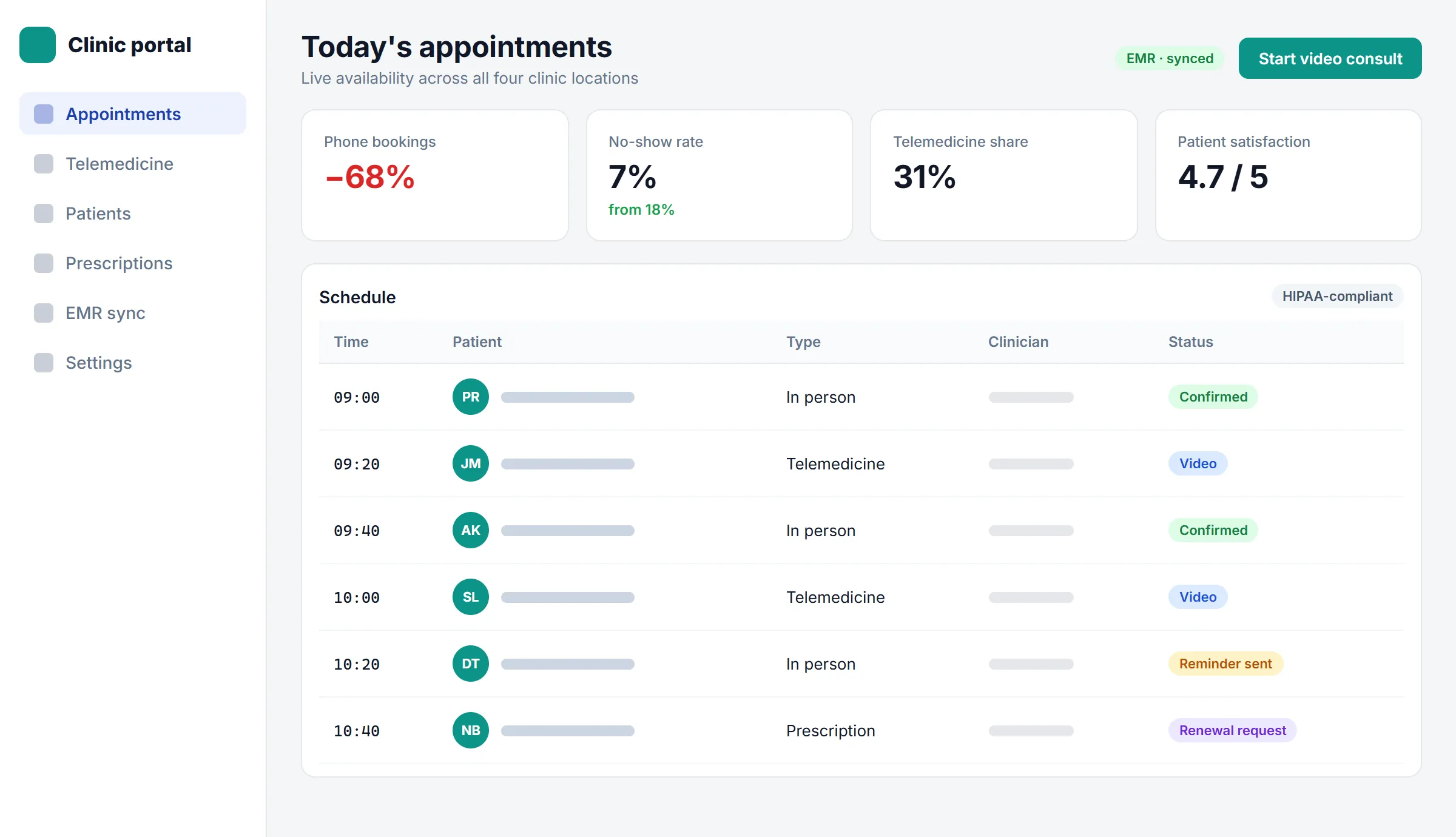
A regional healthcare group operating four clinics needed a modern patient-facing mobile application to replace their outdated phone-only booking system. Patients were frustrated with 15-minute hold times, receptionists were overwhelmed, and the group was losing appointments to competitors with digital booking. DataVonix designed and built a cross-platform mobile app for iOS and Android that streamlined appointment booking, enabled telemedicine consultations, and gave patients secure access to their health records - all within a HIPAA-compliant architecture.
Start Your Project →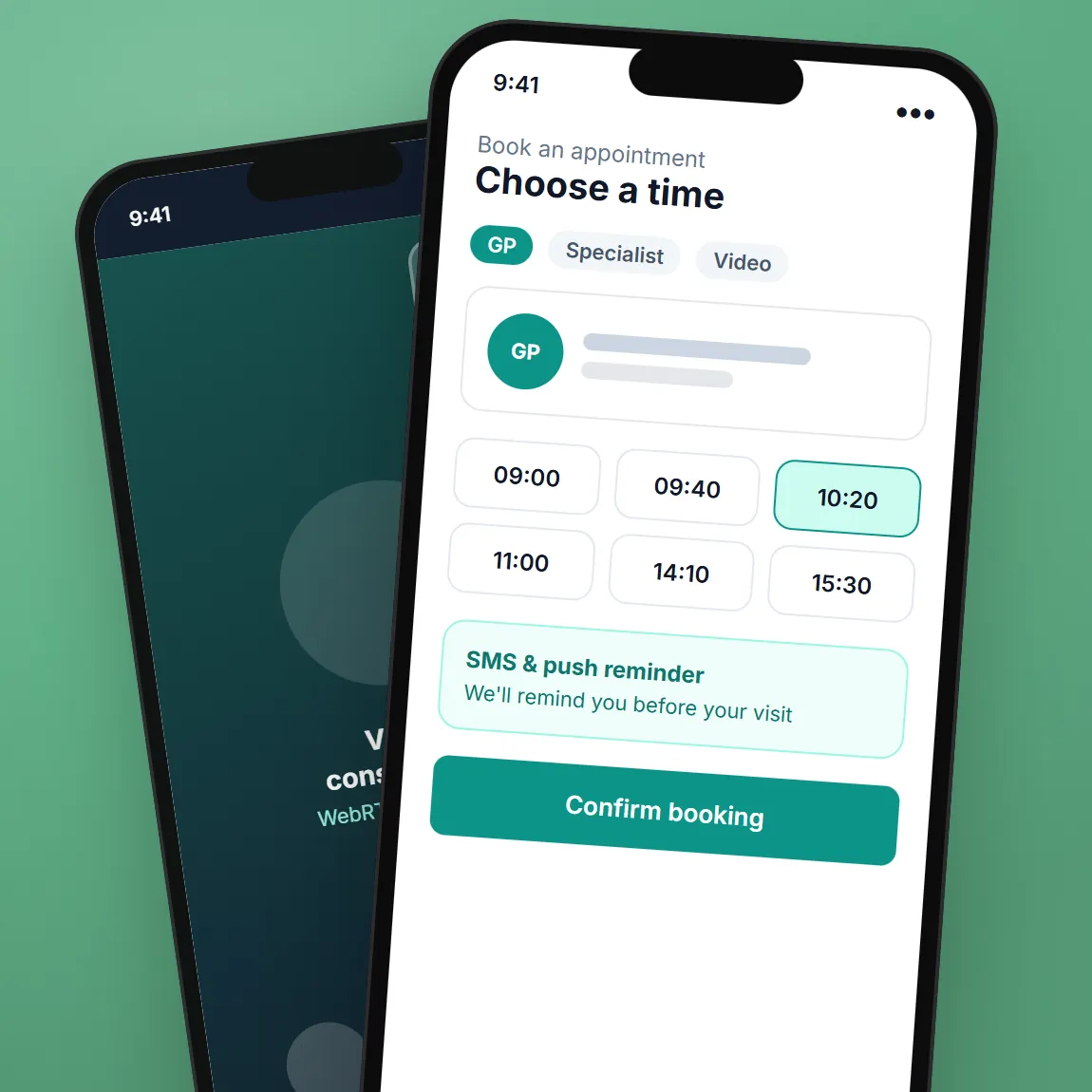
Challenge
Healthcare app development carries unique constraints that make it significantly more complex than standard mobile development. Every design decision must consider patient privacy (HIPAA in the US), data security, accessibility compliance (WCAG 2.1 AA), and clinical workflow integration. The clinics used an existing Electronic Medical Records (EMR) system that needed to be integrated - not replaced - requiring a custom API layer between the app and the legacy system.
Additional challenges included supporting patients across a wide age range (many elderly users with limited tech confidence), handling unreliable internet connections in rural areas where some patients lived, and maintaining 99.9% uptime for a service patients depend on for urgent care access.
Category
Industry
Stack
Approach
DataVonix chose React Native for the mobile frontend, enabling a single shared codebase for iOS and Android while delivering native performance. The backend was built on ASP.NET Core 8 with a clean REST API, deployed on Azure with all data stored in the UK region to meet data residency requirements.
A dedicated integration layer was built to communicate with the clinic's existing EMR system via its proprietary API, normalising data between the two systems and handling retry logic for API failures.
Delivered
Real-time appointment booking
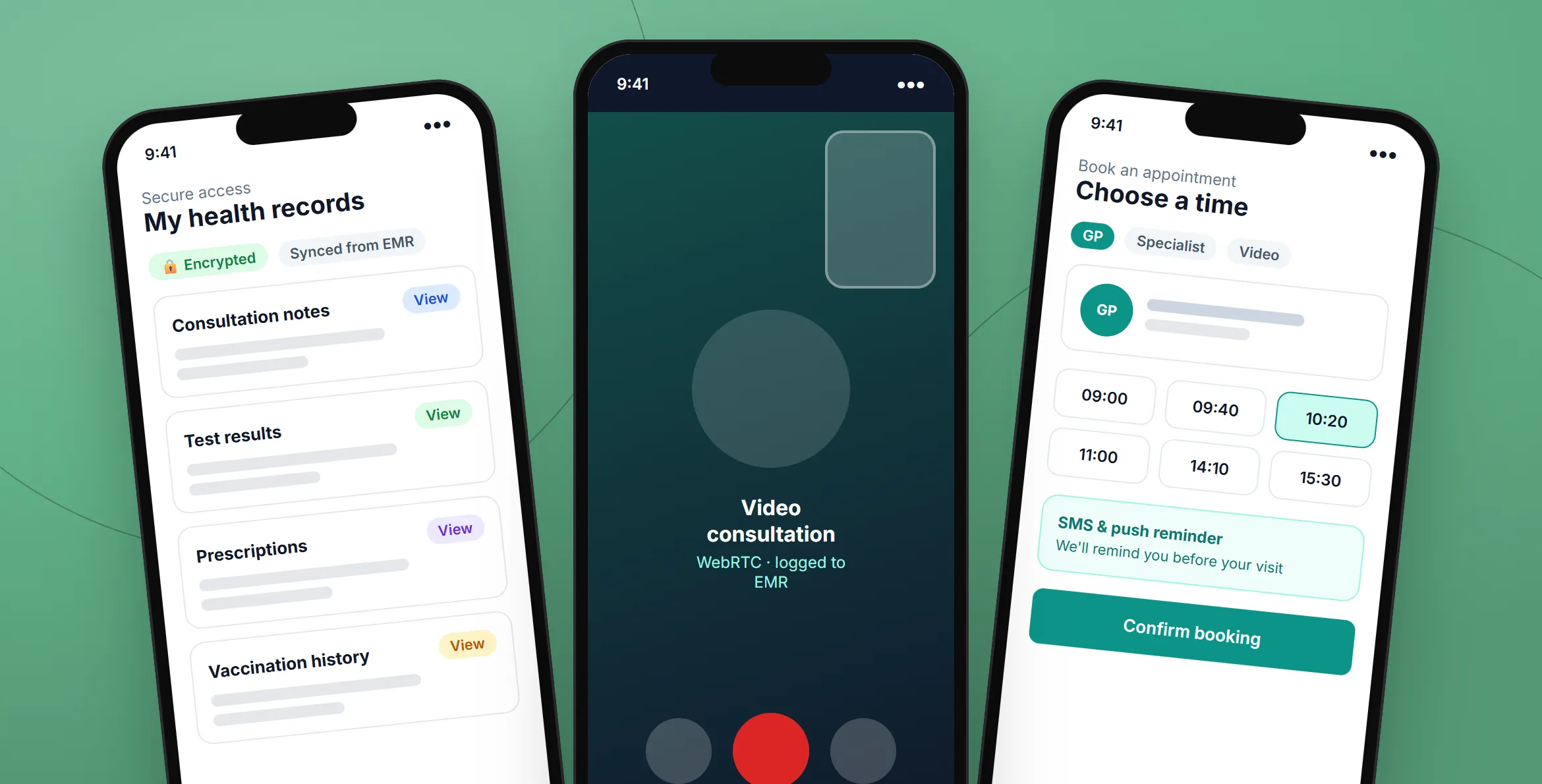
Patients can view live availability across all four clinic locations, filter by GP or specialist, and book, reschedule, or cancel appointments instantly. Automated SMS and push notification reminders reduce no-shows.
Telemedicine video consultations
Integrated video calling (built on WebRTC) enables GPs to conduct virtual appointments directly through the app. The consultation is logged against the patient record in the EMR automatically.
Secure health record access
Patients can view their consultation notes, test results, prescriptions, and vaccination history. All records are fetched in real time from the EMR via the integration layer, with end-to-end encryption in transit and at rest.
Prescription renewal requests
A structured form allows patients to request repeat prescription renewals, which are routed to the prescribing GP for approval. Approved prescriptions are sent directly to the patient's nominated pharmacy.
Symptom checker triage
An AI-assisted symptom checker helps patients determine whether their issue warrants an urgent same-day appointment, a routine booking, or self-care advice - reducing unnecessary GP visits.
Accessibility-first design
Large text options, high-contrast mode, screen reader compatibility, and simplified navigation flows were built specifically to support elderly and less tech-confident users.
Implementation
The application was designed to HIPAA standards throughout. Patient data is encrypted at rest using AES-256 and in transit using TLS 1.3. Multi-factor authentication is required for all patient accounts. All data access is logged in a tamper-proof audit trail. The Azure infrastructure uses private endpoints, network security groups, and Azure Key Vault for secrets management. A full penetration test was conducted before launch.
Implementation
For patients in low-connectivity areas, the app uses a local SQLite cache to store upcoming appointments and recent records. When connectivity is restored, data syncs automatically. This was a critical requirement given the rural patient population.
Outcome
68%
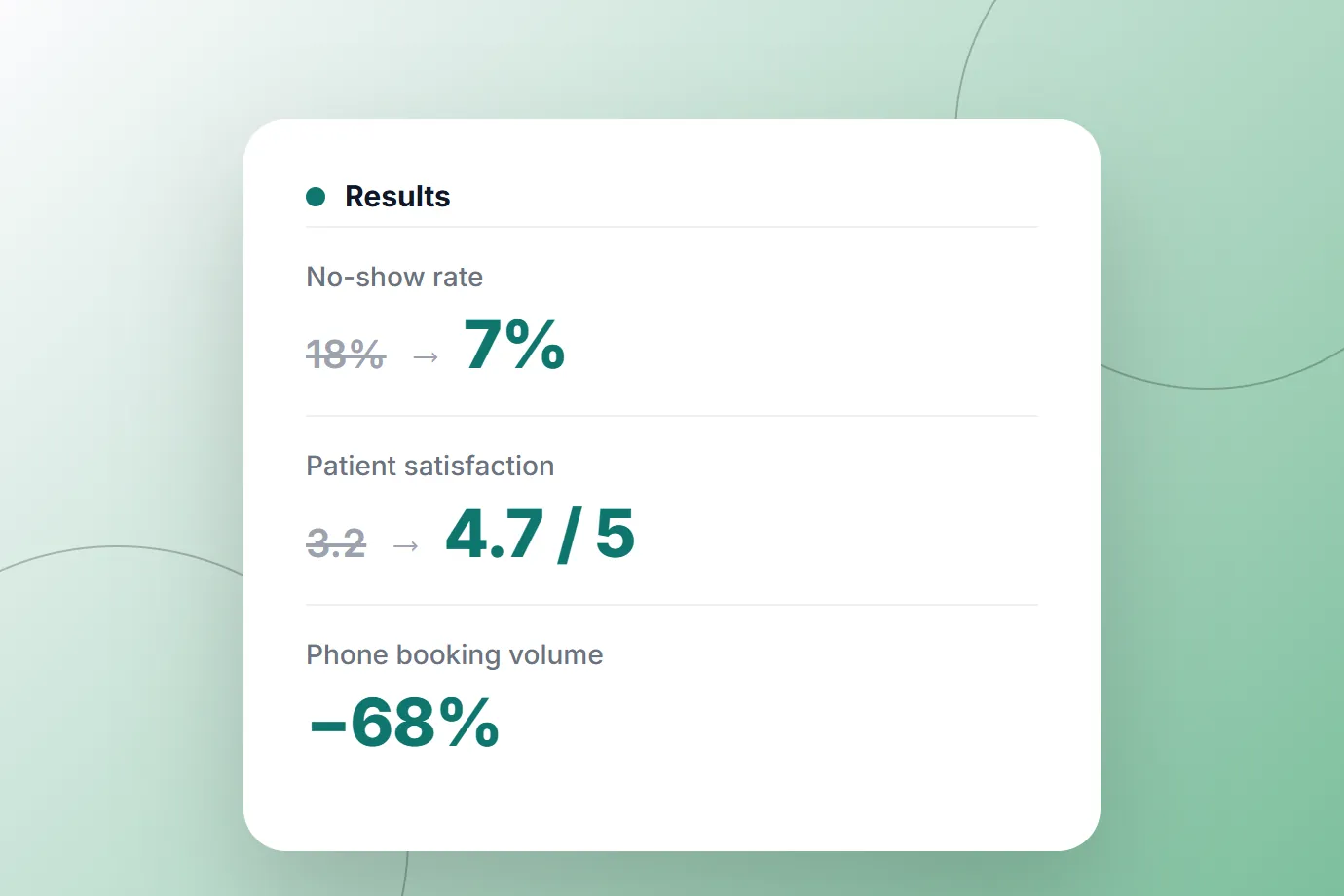
Phone booking volume reduced by 68% within 3 months of launch
18% to 7%
Appointment no-show rate dropped from 18% to 7% due to automated reminders
3.2 to 4.7 out of 5
Patient satisfaction score improved from 3.2 to 4.7 out of 5
31%
Telemedicine now accounts for 31% of all consultations
55%
Receptionist call handling time reduced by 55%
4.8/5
App Store rating: 4.8/5 (iOS) and 4.7/5 (Android) within 6 months
Tech stack
Portfolio
Tell us about your idea and we'll build something you're proud of.
Contact us
Send over the problem, the deadline, or the half-finished system. We come back with an honest scope, an architecture direction, and a number.