E-Commerce Platform Overhaul
E-commerceWeb Development
ASP.NET Core 8Next.js 14SQL ServerRedis

Case study
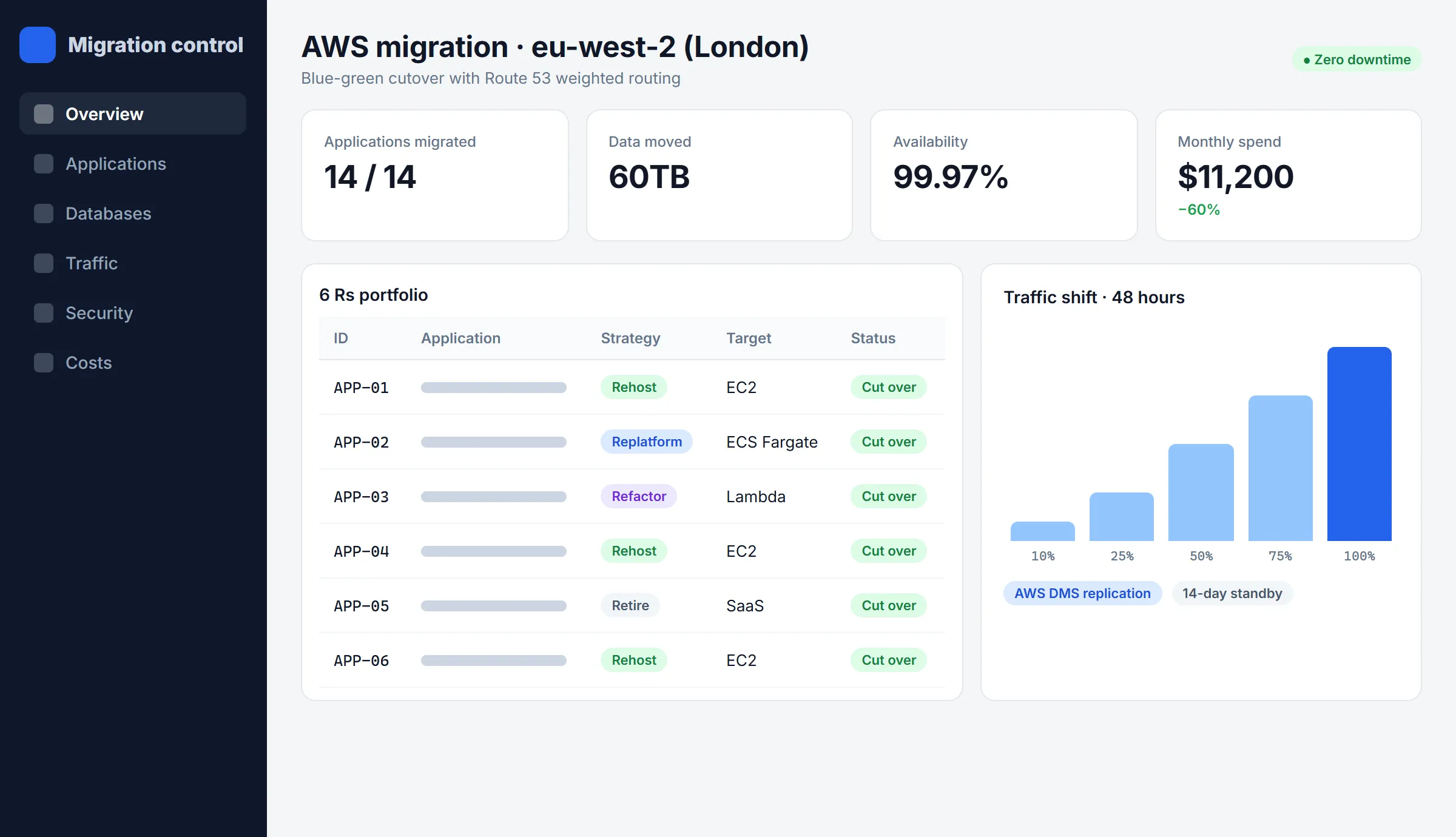
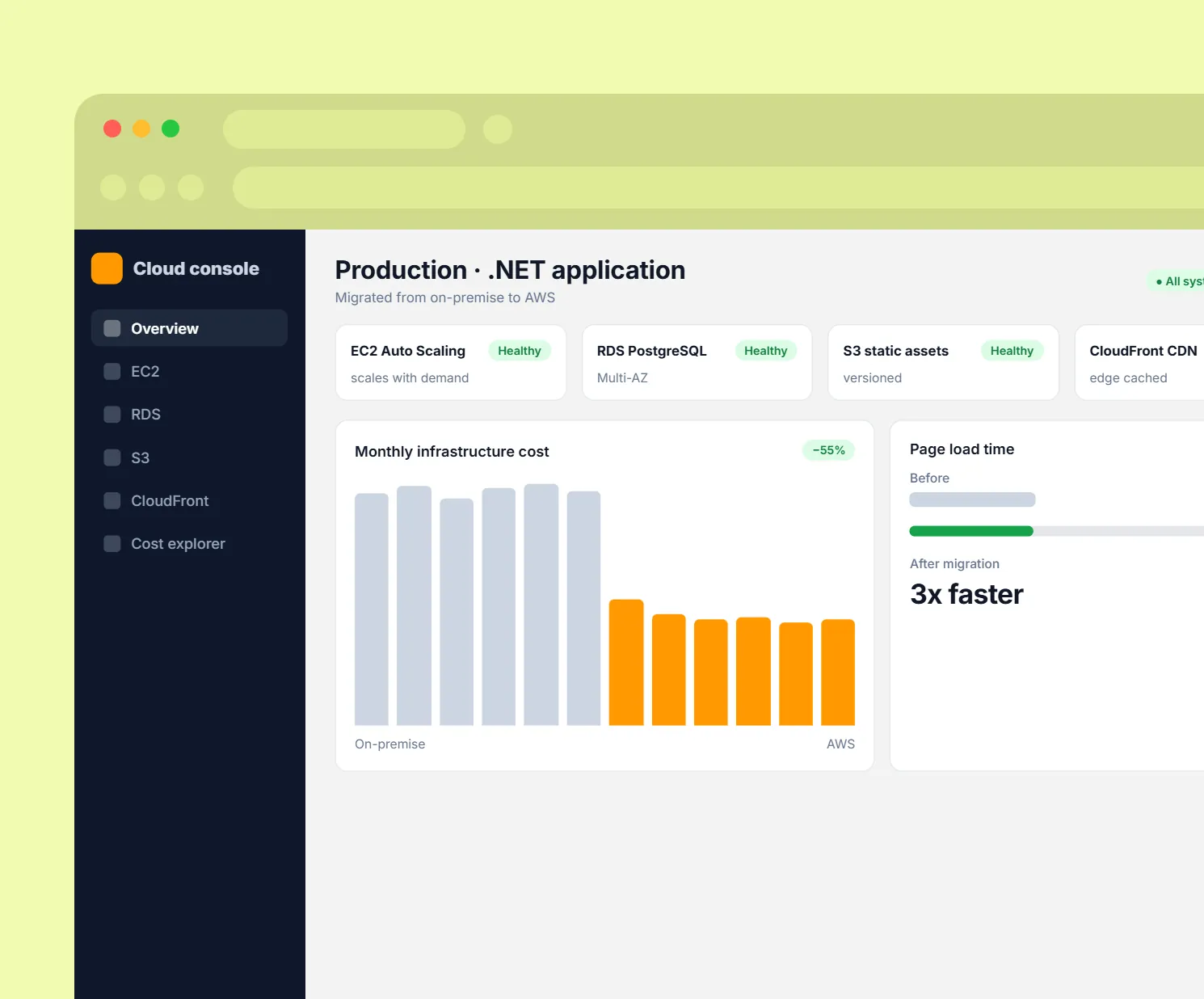
A financial services company had been running critical business systems on ageing on-premise servers for over a decade. Rising hardware maintenance costs, unplanned downtime incidents, inability to scale during peak periods, and an impending data centre lease expiry made cloud migration a business priority. DataVonix planned and executed a full cloud infrastructure migration to Amazon Web Services (AWS) - moving 14 applications, 3 databases, and 60TB of data with zero downtime and a 60% reduction in monthly infrastructure spend.
Start Your Project →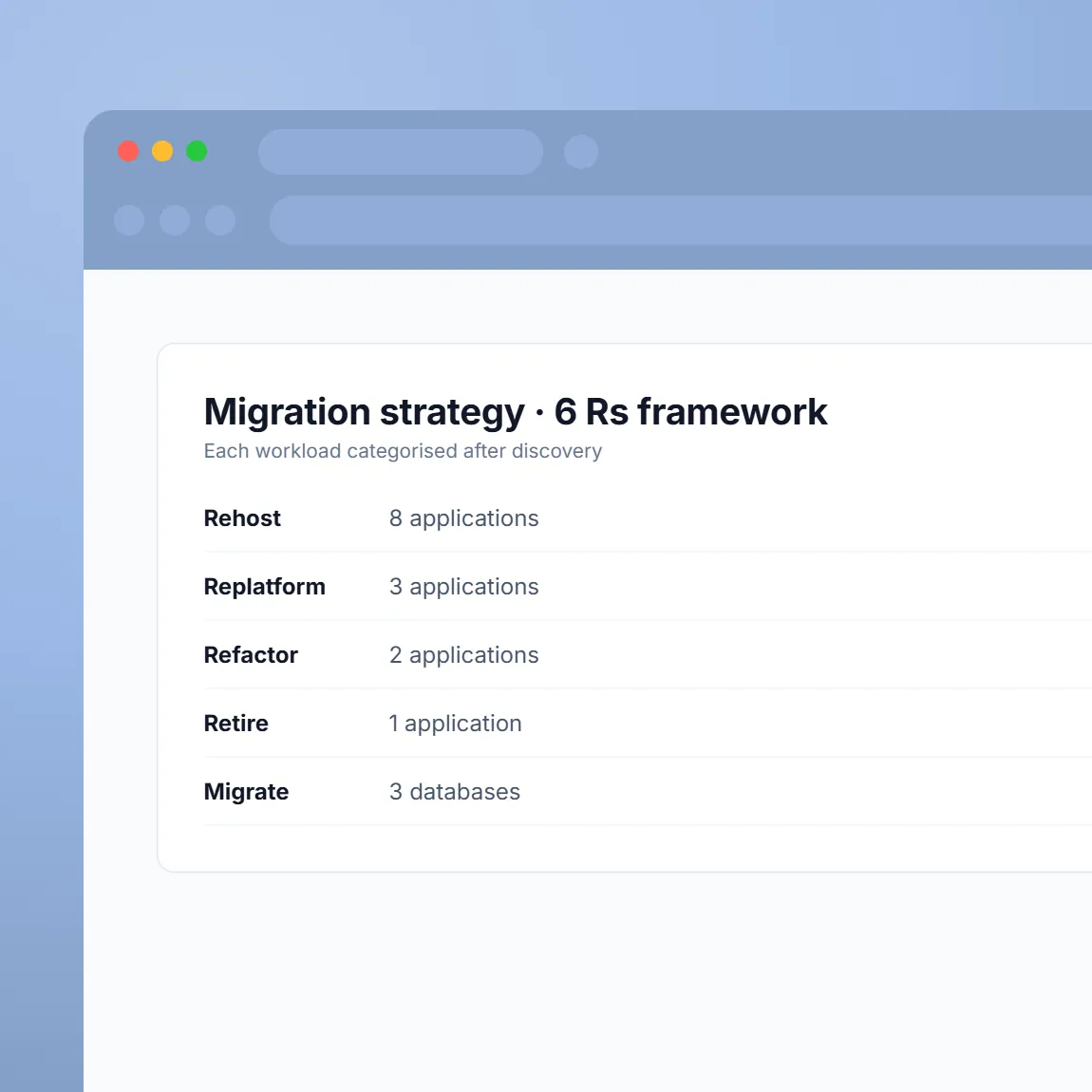
Challenge
Cloud migrations in the financial services sector carry enormous risk. Any downtime on core systems directly impacts revenue and client trust. Regulatory compliance (FCA guidelines) required all data to remain within UK AWS regions. The legacy systems included a mix of Windows Server 2008 applications, Oracle databases, and custom-built middleware - many of which had no documentation and some that had not been touched in years.
The client's internal IT team had no AWS experience, meaning DataVonix needed to not only execute the migration but also upskill the team and establish operational procedures for the new cloud environment.
Category
Industry
Stack
Approach
DataVonix used Amazon's 6 Rs framework to categorise each workload: Rehost (lift-and-shift), Replatform, Refactor, Repurchase, Retire, or Retain. After a thorough discovery phase, the portfolio broke down as follows:
8 applications
Rehosted to EC2 instances using AWS Application Migration Service
3 applications
Replatformed to containerised workloads on Amazon ECS with Fargate
2 applications
Refactored to serverless architecture using AWS Lambda and API Gateway
1 application
Retired (replaced by a SaaS product already in use)
3 databases
Migrated from Oracle to Amazon RDS for SQL Server using AWS Database Migration Service
Approach
The migration used a blue-green deployment model. Each application was stood up in AWS in parallel with the on-premise system. AWS Database Migration Service (DMS) handled continuous replication of database changes during the transition period. Once the AWS environment was validated and load-tested, traffic was switched over via Route 53 weighted routing - starting at 10% and increasing to 100% over 48 hours. The old systems remained on standby for 14 days post-cutover before decommissioning.
Implementation
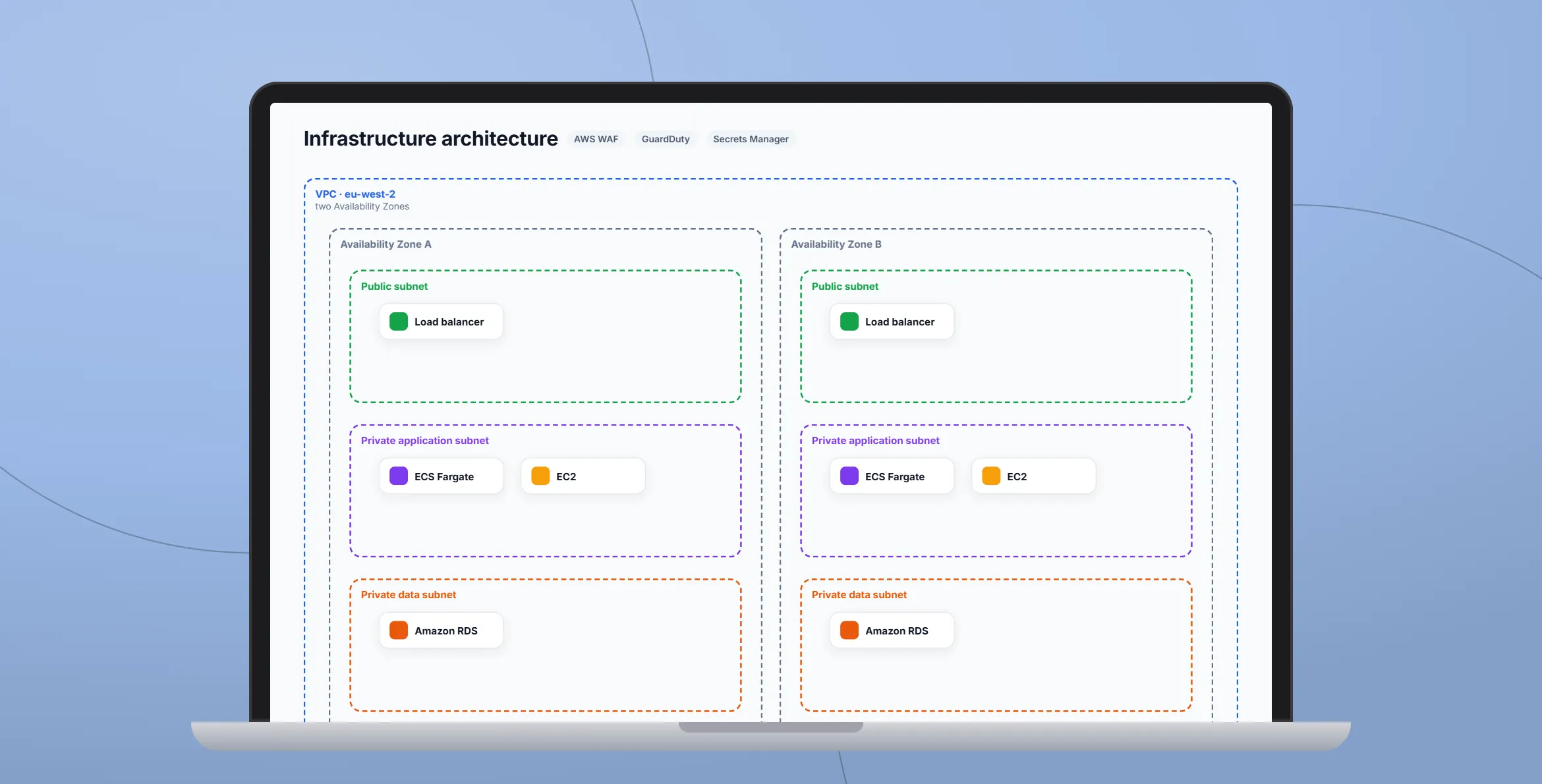
The target AWS architecture was designed with security and resilience as first principles. All resources are deployed across two Availability Zones in eu-west-2 (London). A multi-layer network design uses VPCs with public, private application, and private data subnets. Internet-facing load balancers sit in the public subnet; application servers are in the private application subnet with no public IP addresses; databases are in the private data subnet, accessible only from the application layer.
AWS WAF protects all public endpoints. AWS Shield Standard provides DDoS protection. CloudTrail logs all API activity. AWS Config monitors infrastructure compliance. GuardDuty provides threat detection. All secrets (database passwords, API keys) are managed in AWS Secrets Manager with automatic rotation.
Implementation
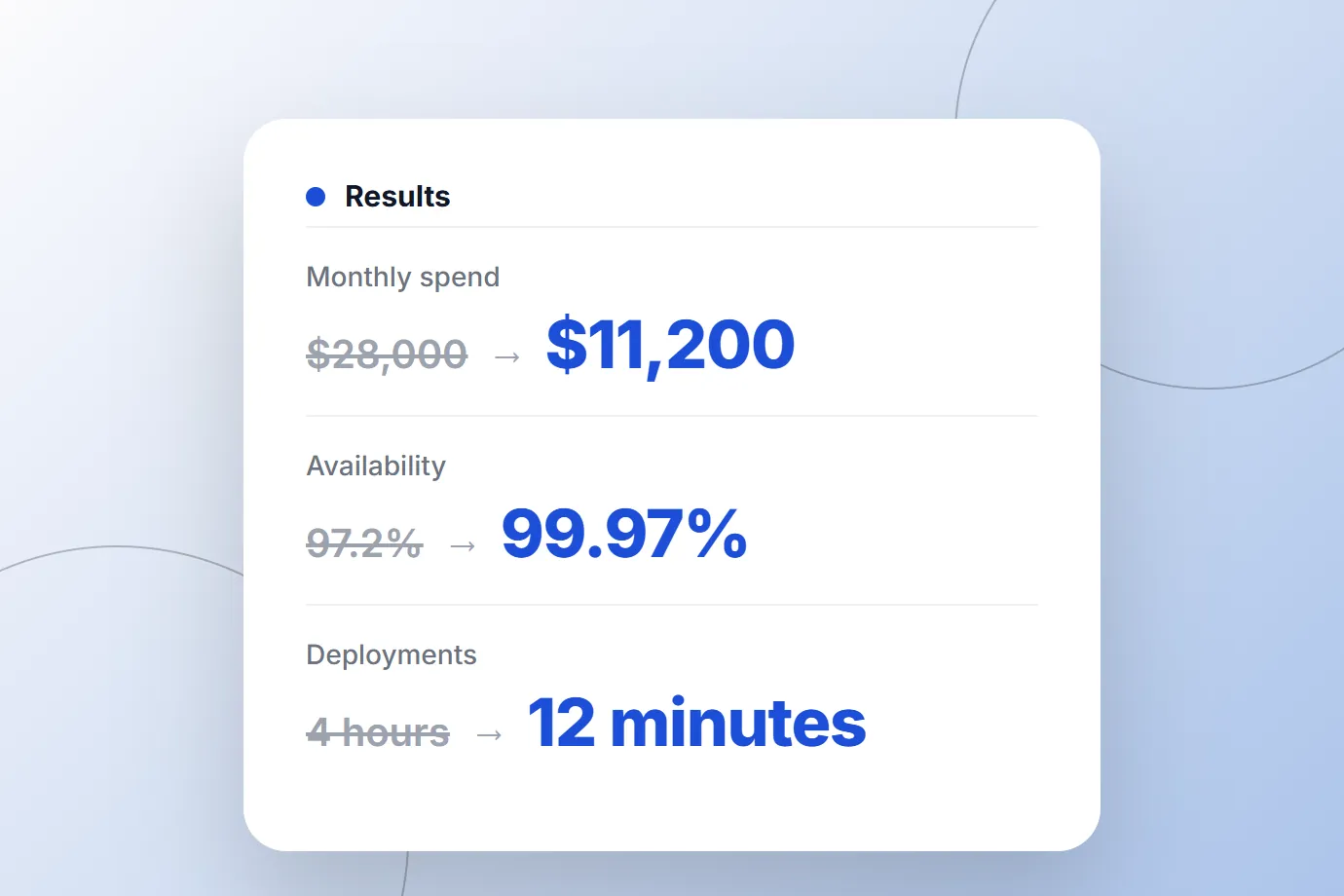
The on-premise environment was costing approximately $28,000 per month in hardware maintenance, data centre colocation, and staffing. The AWS environment was architected for cost efficiency from the start: EC2 Reserved Instances (1-year) for predictable workloads, Spot Instances for batch processing jobs, S3 Intelligent-Tiering for archive data, and AWS Compute Optimizer recommendations implemented from day one. Total monthly AWS spend: $11,200 - a 60% reduction.
Implementation
DataVonix delivered a tailored AWS training programme for the client's 4-person IT team covering: AWS core services, the AWS Well-Architected Framework, CloudWatch monitoring and alerting, incident response procedures, and cost management. All four team members achieved AWS Cloud Practitioner certification within two months of migration completion.
Outcome
Zero downtime
Zero downtime during migration cutover across all 14 applications
$28,000 to $11,200 per month
Infrastructure spend reduced from $28,000 to $11,200 per month (60% saving)
97.2% to 99.97%
System availability improved from 97.2% to 99.97% year-on-year
4 hours to 12 minutes
Deployment time for application updates reduced from 4 hours to 12 minutes (CI/CD pipeline)
40%
Database query performance improved by 40% on RDS vs. legacy Oracle hardware
RTO of 15 minutes
Full DR (Disaster Recovery) capability established with RTO of 15 minutes vs. 8+ hours previously
Tech stack
Portfolio
Tell us about your idea and we'll build something you're proud of.
Contact us
Send over the problem, the deadline, or the half-finished system. We come back with an honest scope, an architecture direction, and a number.