
Case study
e-commerce platform overhaul
A growing multi-vendor marketplace had hit the ceiling of its legacy platform.
- Industry
- E-commerce
- Category
- Web Development
- Core stack
- ASP.NET Core 8 · Next.js 14
What it is
A multi-vendor e-commerce marketplace
Who it's for
A growing online marketplace and its vendors
What it does
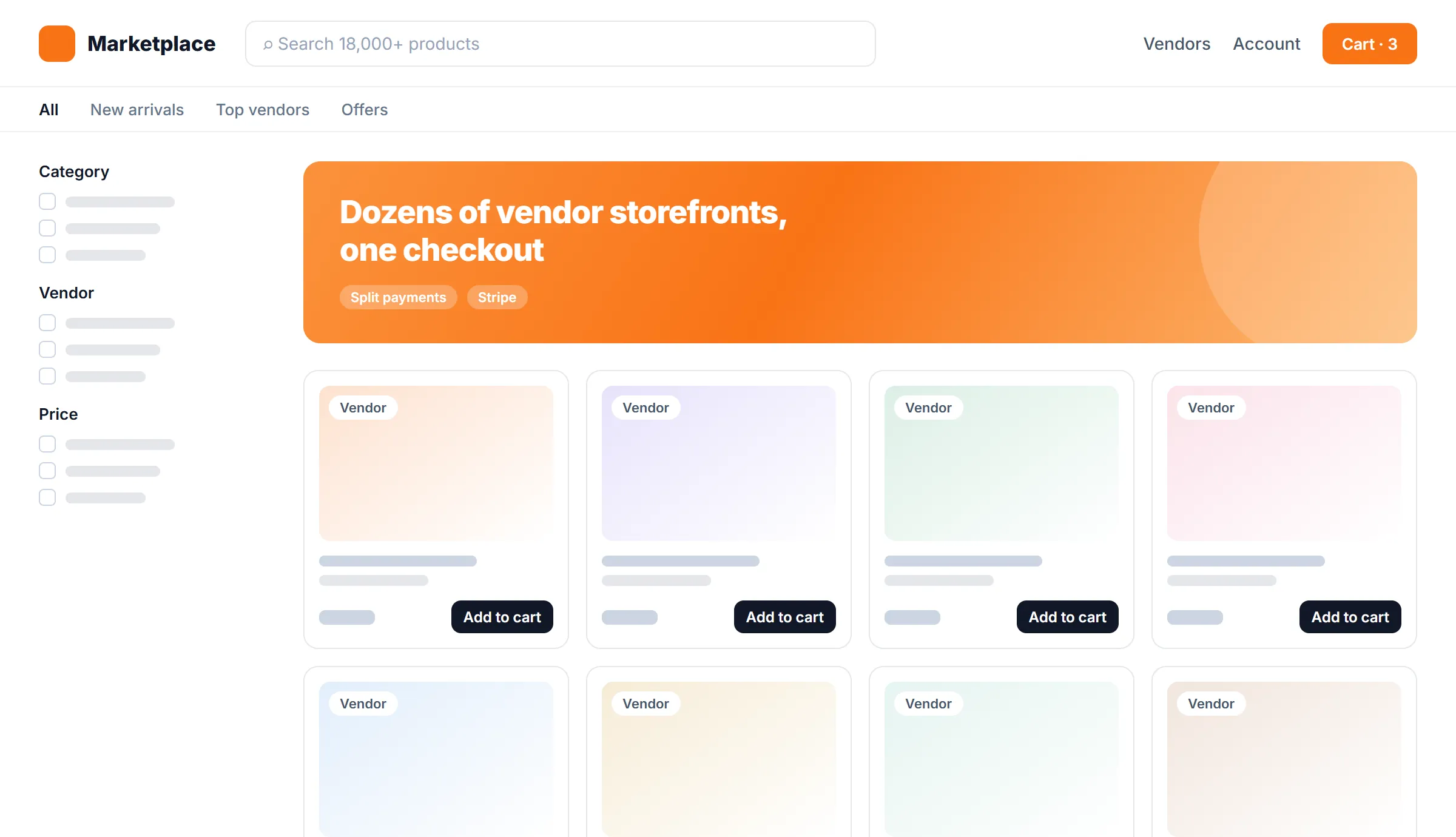
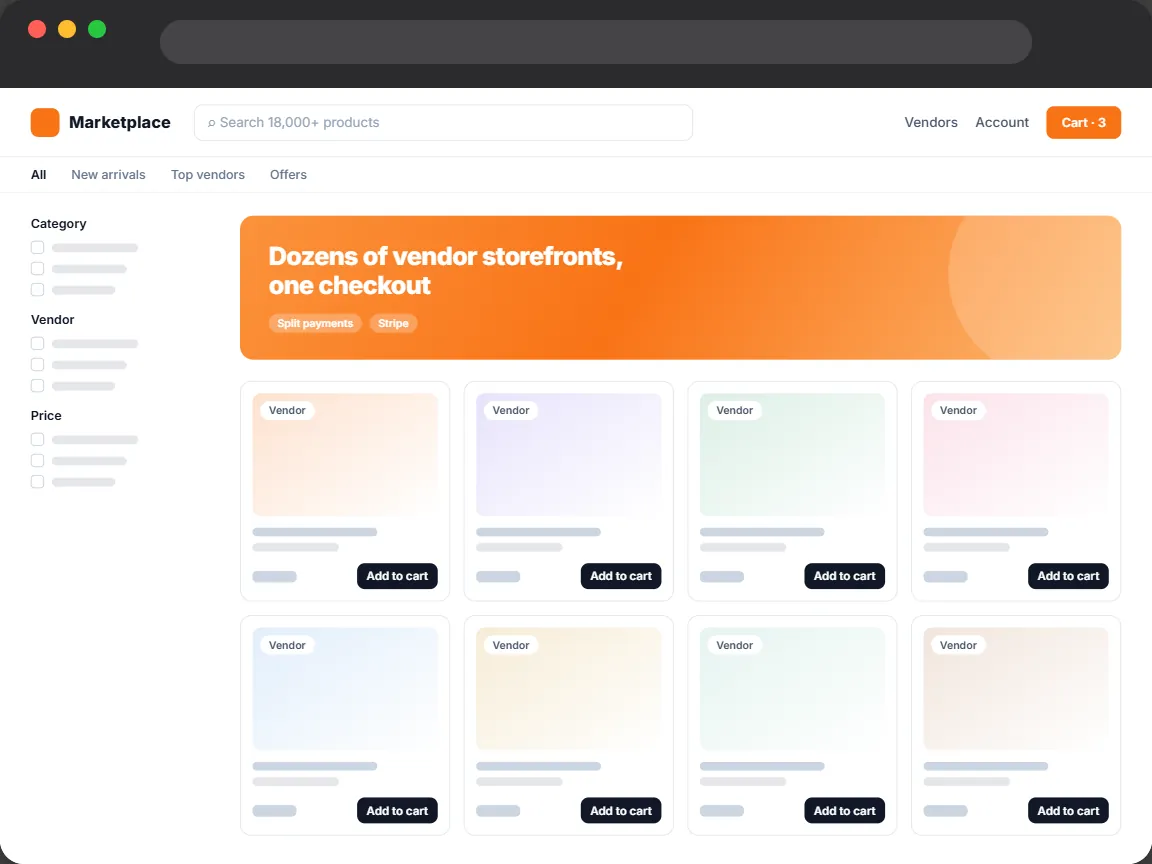
Lets dozens of vendors sell through one fast storefront and one checkout
The challenge
the problem we were asked to solve
The existing platform was built on a PHP monolith from 2015. It had no proper API layer, vendor management was handled through spreadsheets, and every new feature required weeks of risky modifications to core files. The client needed a complete rebuild without losing existing product data, vendor accounts, or SEO rankings.
Key challenges included: migrating over 18,000 SKUs and 3,200 customer accounts with zero data loss, maintaining URL structures to preserve Google rankings, building a real-time inventory sync between vendor warehouses and the storefront, and launching with a hard deadline tied to a peak sales season.
What we built
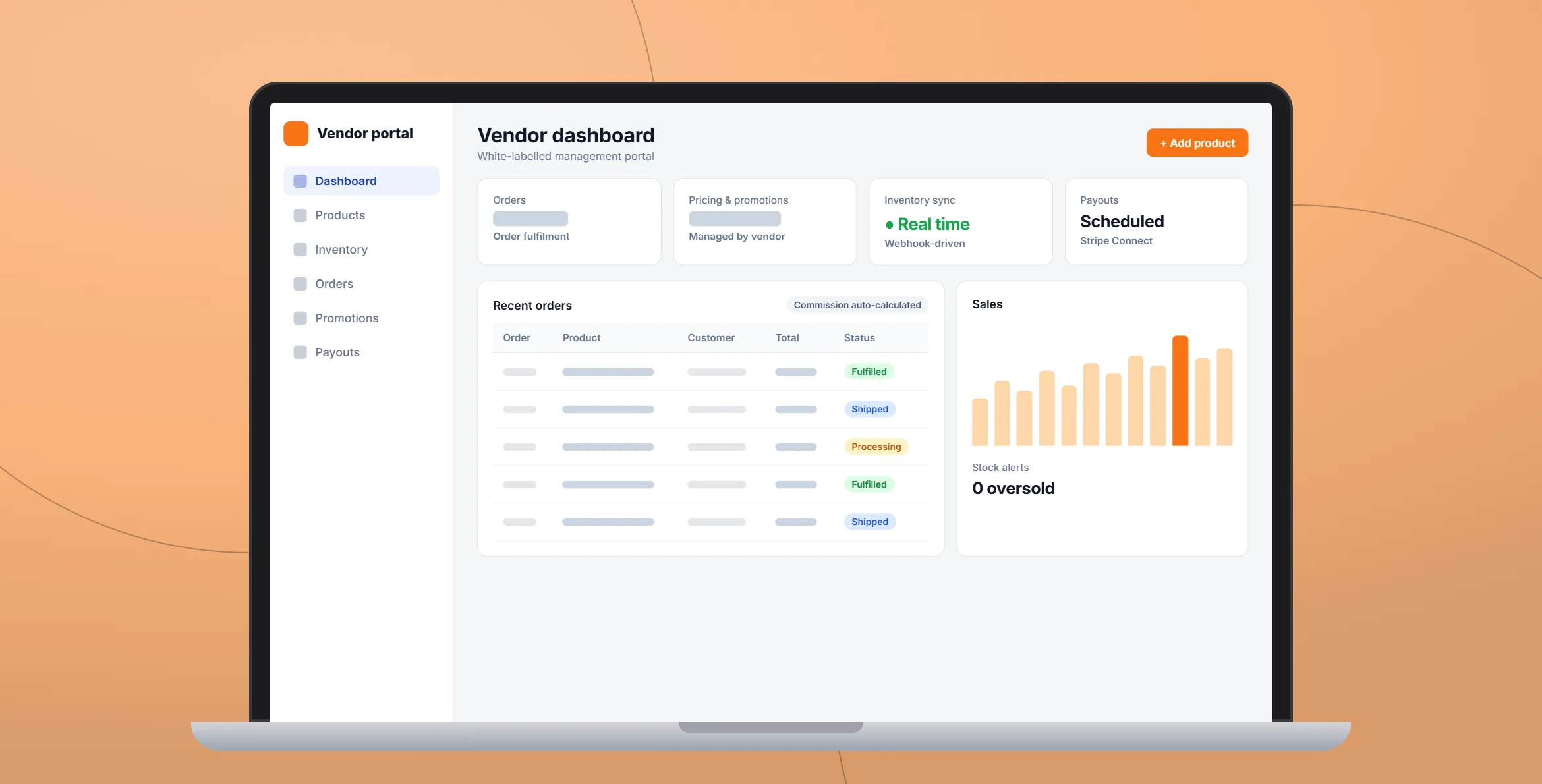
- Multi-vendor dashboardEach vendor gets a white-labelled management portal to manage their own inventory, pricing, promotions, and order fulfilment independently.
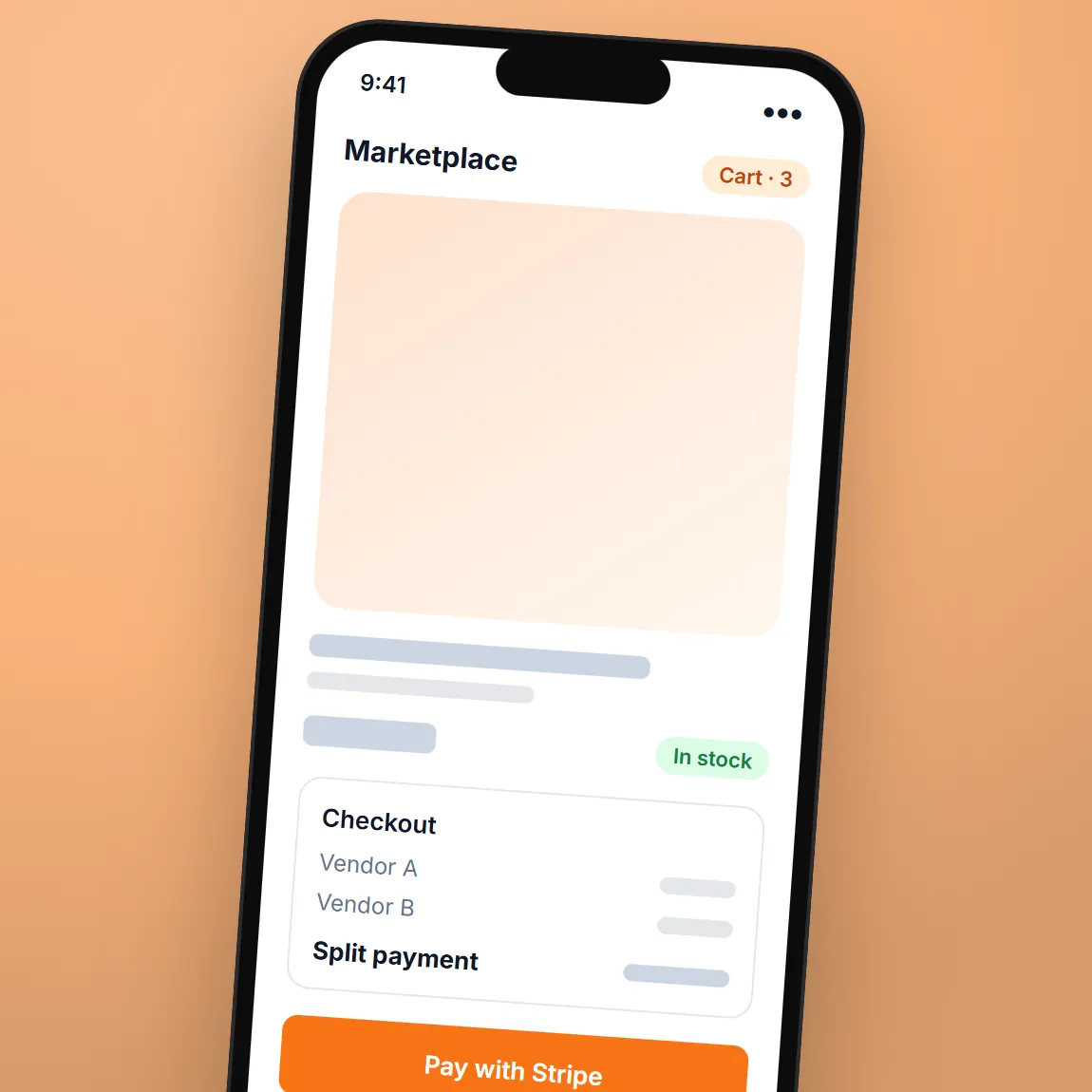
- Smart checkout with Stripe integrationA unified cart that handles split payments across multiple vendors, with automatic commission calculation and vendor payout scheduling.
- Real-time inventory managementWebhook-driven stock updates keep product availability accurate across all vendor warehouses in real time, eliminating overselling.
- Advanced product searchElasticsearch-powered search with faceted filtering, synonym matching, and personalised ranking based on purchase history.
- Mobile-first PWAThe storefront is a Progressive Web App, delivering native app-like performance on mobile browsers, with offline browsing and push notification support.
- Automated SEO infrastructureDynamic sitemap generation, structured product data (JSON-LD), canonical URL management, and Core Web Vitals optimisation baked into the build pipeline.
How it works
how it works, step by step
- 01
Vendors list
Each vendor manages products, prices and stock from its own dashboard.
- 02
Shoppers search
Faceted, typo-tolerant search finds the right product quickly.
- 03
One checkout
A single cart takes payment for several vendors at once.
- 04
Stock stays true
Inventory updates in real time, so nothing is oversold.
- 05
Vendors get paid
Commission and payouts are calculated automatically.
Screens
see it in action
Results
what changed for them
8.2 seconds to 1.4 seconds
Page load time reduced from 8.2 seconds to 1.4 seconds on mobile
74% to 41%
Cart abandonment rate dropped from 74% to 41% within 60 days of launch
3 days to 2 hours
Vendor onboarding time reduced from 3 days to 2 hours with self-serve portal
62%
Google organic traffic increased 62% in the first quarter post-launch
5x peak load
Platform now handles 5x peak load compared to the previous system
Built with
how it's built
DataVonix architected a modern solution using ASP.NET Core 8 for the backend API, Next.js 14 for the storefront frontend, and SQL Server with Redis caching for data persistence and performance. The multi-vendor architecture was built around a clean domain model separating vendor accounts, product catalogues, orders, and fulfilment workflows.
The system follows a clean microservices-inspired architecture with bounded contexts for catalogue management, order processing, payments, notifications, and vendor administration. An API gateway routes requests to the appropriate services, with JWT authentication and role-based access control governing vendor vs. admin vs. customer permissions.
Want a Similar Project?
Tell us about your idea and we'll build something you're proud of.
Contact us
let us make the web talk about your project
Send over the problem, the deadline, or the half-finished system. We come back with an honest scope, an architecture direction, and a number.